
Your Smoke Detector Screams. Your AED Whispers.
I dropped my son off at summer camp a few weeks ago. The camp runs out of a community center owned by the town. Hundreds of people move through that building every day — kids, camp counselors, parents at pickup, seniors using the facility in the afternoon.
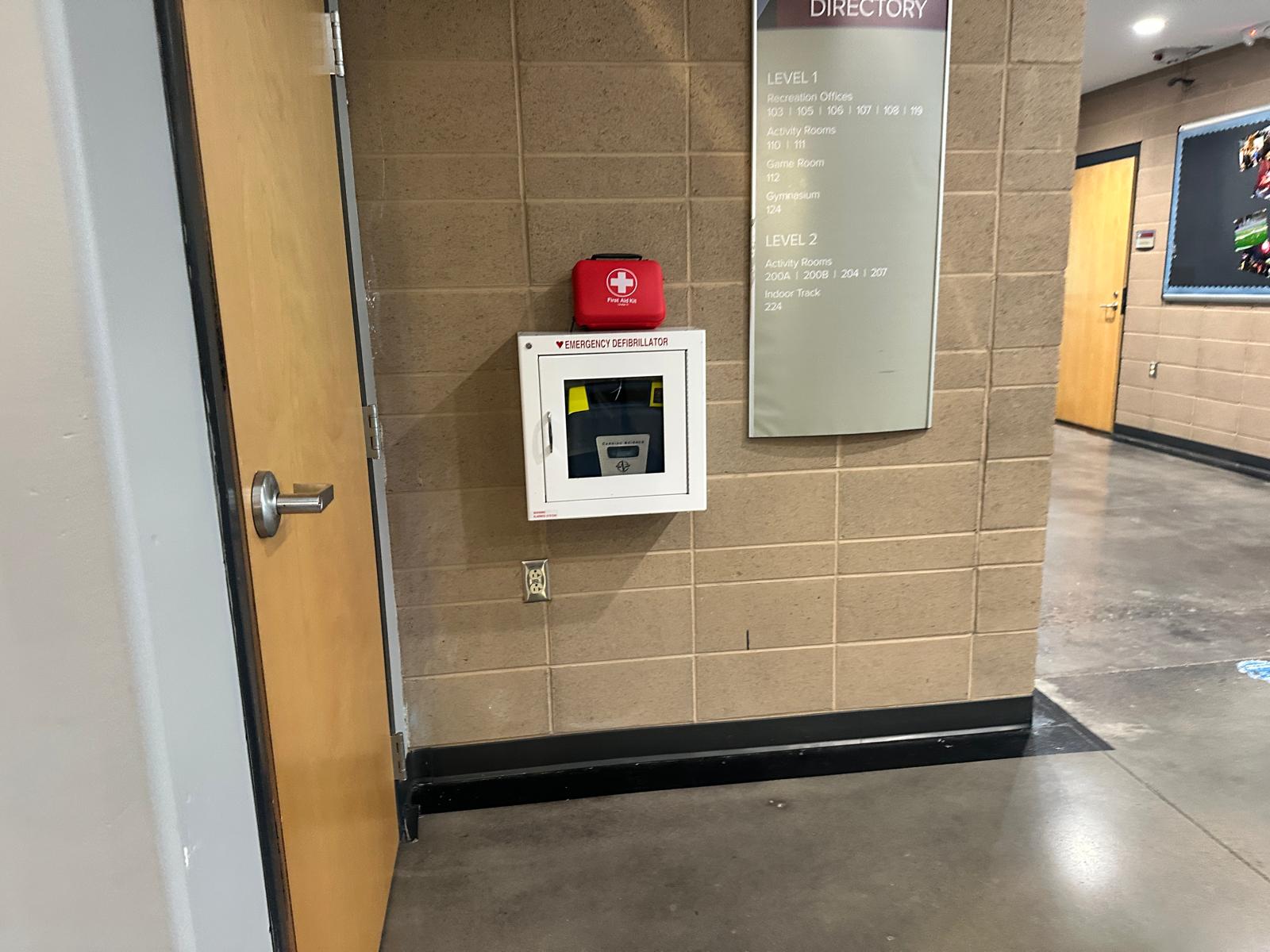
There’s an AED mounted on the wall right by the front check-in area. Good placement. Exactly where it should be. There was even a first aid kit sitting on top of the cabinet.
I looked at it the way I look at every AED I walk past, which is an occupational habit at this point. The status indicator wasn’t green.
It wasn’t dark, either — that’s the part I want you to understand. It was lit red. The manual for that unit calls the failure indicator red, and red is what it was, roughly the size of a dime. But it read dull and dim rather than alarming, sitting behind cabinet glass that throws back every reflection in the hallway. I had to stop and look closely to be certain of what I was seeing, and I do this for a living.
So I opened the cabinet. The cabinet alarm didn’t sound — that battery was dead too. There was a maintenance record card mounted right there inside the door, and an inspection tag on the unit. The last signature was from December 2025. Eight months.
Then I opened the case. The AED screen read Battery Low. And it was beeping.
There was a sticker on the side: Property of the ______ Fire Department.
I’m not naming the town, the department, or the camp, because this isn’t a story about them. I’ve found some version of this more often than not, at facilities of every kind, in two states. This one just happened to be where my kid spends his summer.
The AED Was Asking for Help the Entire Time
Here’s the thing most people don’t know: that status indicator isn’t decorative. It’s the result of a test the machine runs on itself, automatically, on a schedule — checking its battery, its internal electronics, and on many models its pads. When everything passes, the indicator shows the ready color, typically green. When something fails, the indicator changes and the unit starts beeping.
That AED had detected its own failure. It had reported it correctly, through both of the channels available to it — a visual indicator and an audible alert. It had been doing that continuously, in a building full of people, for who knows how long.
The device did its job perfectly. Every part of the system built around the device did not.
So the real question isn’t why the AED failed. It’s why two separate warnings, running for months, reached nobody.
Warning One: A Light You Have to Hunt For
Start with the visual, because it’s the one everybody assumes is foolproof.
On paper this one should be easy. Green means ready, red means it failed, and the indicator is about the size of a dime. Hard to miss, surely.
In practice it was dim rather than bright, mounted behind glass that mirrored the corridor lighting at most angles, and from any normal walking distance it read as nothing more than a light is on. Which is exactly how a car dashboard looks to someone who has never been taught which lights matter.
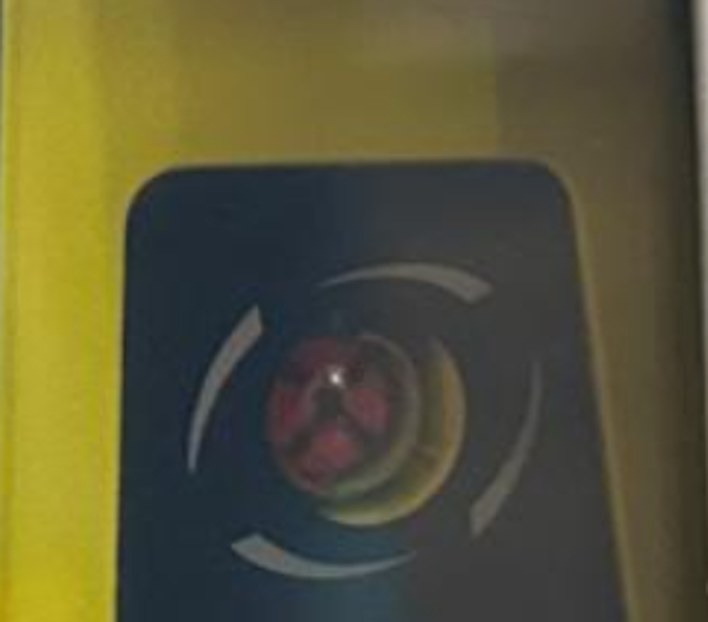
But here’s the part that actually matters, and it has nothing to do with optics: nobody was looking.
A warning light only works as a warning when people have been taught to check it — the way you glance at a fuel gauge without deciding to. Nobody at that facility had ever been told the box on the wall has a gauge, let alone which color means trouble. You can make the light bigger and brighter and it changes nothing, because the number of people checking it was zero. The indicator was correctly reporting a critical failure to an audience that had never been told the indicator existed.
Warning Two: A Sound That Can’t Get Out
This is the part I want facility managers to sit with, because the answer isn’t “the staff didn’t care.”
Three things stand between that alarm and a human ear, and every single one of them is there for a good reason.
The carry bag. Many AEDs sit inside a soft case. It protects the unit and makes it grab-and-go in an emergency. That’s a feature.
The cabinet. Sealed, wall-mounted, often alarmed. It prevents theft, keeps the unit from wandering off, protects it from damage, and in a lot of jurisdictions it’s required — you’d get written up by a fire inspector for not having one.
The lobby itself. Busy, echoing, people talking, doors opening, kids everywhere. And that noise is the direct consequence of correct placement, because an AED belongs where the people are.
Stack a soft case inside a sealed cabinet in a noisy room, and you have three individually correct decisions that combine to defeat the only channel the device has for asking for help. Nobody ever evaluated them together. There’s no step in any process where someone asks, “if this thing starts beeping, who actually hears it?”
I want to be precise here: you could hear it from the front desk. It wasn’t silent. It was muffled, and it was competing with a busy room — the kind of sound that registers as background rather than as a warning.
The Comparison That Explains Everything
Think about where a smoke detector lives.
Ceiling-mounted. Out in the open, with nothing enclosing it. Up high, where sound radiates down across an entire room, carries into hallways, and bounces off hard surfaces. In most buildings built or renovated in the last few decades they’re interconnected, so one unit chirping is one unit chirping — but one unit alarming sets off every detector in the building. Every choice in that installation is arranged so the sound finds you whether you’re looking for it or not.
Now think about where an AED lives.
Chest height. Inside a soft case, inside a sealed cabinet, mounted flat against a wall — so whatever sound it makes has to pass through fabric, then through a closed enclosure, and then radiate off drywall before it reaches open air. One unit, by itself, connected to nothing and no one.
Same category of sound. Two completely different paths to a human ear.
Then there’s what happens once the sound does reach you. Every adult in America knows the smoke detector chirp, and knows it means change the battery, tonight. That shared understanding didn’t appear on its own — it’s the product of decades of deliberate public education. Fire departments, schools, PSAs, “change your clocks, change your batteries.”
There has been essentially none of that for AEDs. Most people don’t know they beep at all.
So a faint sound shows up in a busy lobby and nobody’s first guess is “the defibrillator is dying.” People assume a smoke detector down the hall, a refrigerator, something in the HVAC. Then it repeats, and nothing bad happens, and it stops registering as a warning at all.
Researchers who study organizational failure have a name for that: a warning signal that persists without consequence gets quietly reclassified as normal. Every day that AED beeped and nobody collapsed was a day the beep meant a little less.
So both alerts failed, for completely different reasons. The light couldn’t be seen from where people walk, by people who’d never been told to look. The sound couldn’t get out of the case and cabinet it lives in, into a room with noise in it. Neither one is a defect in the device. Both are the entirely predictable result of how we install these things — and nobody checks whether the warnings still work after installation, because checking that isn’t anyone’s job either.
The Sticker Is the Root Cause
Property of the ______ Fire Department, on a device mounted inside a town-run community center.
That sticker is the whole problem in one label.
Camp staff read it and reasonably conclude the fire department handles it. The fire department very likely placed or donated the unit years ago and moved on to the next site. Building maintenance codes it as medical equipment, not building equipment, so it never enters the same checklist as the fire extinguishers and the exit signs.
The owner of the asset and the custodian of the location are two different organizations, and the AED lives in the gap between them. It isn’t in anyone’s job description. It isn’t on anyone’s rounds. It belongs to everyone, which is another way of saying it belongs to no one.
Meanwhile the extinguisher forty feet away gets inspected annually by a licensed contractor with a tag, a due date, and a legal obligation behind it — because somewhere along the way, someone assigned that.
The Part That Should Worry You Most
Here’s the question I couldn’t stop thinking about on the drive home.
Was that AED registered with local EMS?
If the fire department owns it, there’s a decent chance it was — logged in dispatch’s registry, possibly in PulsePoint or a similar system. Registration is a genuinely good practice and we recommend it constantly.
But think about what that means in a real emergency. Someone collapses in that building. A 911 call-taker sees a registered AED at that address and tells a bystander to go get it. That bystander runs to the lobby, pulls open a cabinet whose alarm doesn’t work, grabs a unit out of a bag, and finds a machine that won’t deliver a shock.
A registered AED that doesn’t work is worse than no AED at all, because it consumes the exact minutes that determine whether someone lives. Survival in sudden cardiac arrest falls with every minute that passes. A dead device that dispatch believes is live doesn’t just fail to help — it actively spends the time you had.
That’s what an unmaintained AED really is. Not a missing resource. A trap.
The Most Visible AED in the Building Is Your Best Case
This unit was next to the front desk. Staffed all day. Seen by hundreds of people. It is, by a wide margin, the most-observed AED in that facility.
And it went eight months.
That town is a sizable one. They almost certainly have dozens of these deployed — in gyms, back hallways, storage closets, ball fields, buildings with no permanent staff at all. If the one that hundreds of people walk past daily is eight months lapsed, that’s not the worst unit in the inventory. That’s the healthiest specimen of a sick population.
If you manage a facility, the question isn’t whether your best-placed AED is fine. It’s what’s happening to the ones nobody walks past.
One More Thing About That Tag
The last signature was December 2025. But a signature on a tag tells you when someone last wrote on a tag. It doesn’t prove an inspection happened.
A unit that reads Battery Low in August, with a December signature and nothing since, gives you no reason to trust the December entry either. Tags get signed in batches. Tags get signed from memory. Tags get signed because a clipboard needed signatures.
Eight months is the optimistic reading of that tag.
They Had a Spare the Whole Time
I brought it to the staff’s attention. Someone came and looked at it. They ordered a battery.
Then almost two more weeks passed before they put a temporary unit in place, replaced the battery, and restored the original.
I want to be fair about this: they did fix it, and the person I spoke with took it seriously. But two things stand out.
First, once you know, the situation changes. Eight months of not knowing is a systems failure. Two weeks with a confirmed dead AED next to a children’s camp is a decision.
Second — and this is the genuinely encouraging part — they had a spare unit available. They dropped one in. So this was never a budget problem or a supply problem. Nobody needed to file a purchase request or wait on a vendor.
The only thing missing was a name attached to a task. That fix is free.
The 60-Second Check Anyone Can Do
You don’t need to be a paramedic. You don’t need training. Here is the entire inspection, and it’s the one I ran in that lobby:
- Get close and look at the status indicator. Not from across the room — close enough to actually read the color, and move your head to beat the glare off the cabinet glass. Learn what ready looks like on your specific model. A red failure indicator can look dim enough at a glance to register as nothing more than “a light is on.” Anything other than the ready state means it needs attention today.
- Open the cabinet. Does the cabinet alarm sound? That’s a separate battery, and it dies on its own schedule.
- Read the inspection tag. When was it last checked? If the most recent date is more than a month old, the process isn’t running.
- Listen. Get close, with the cabinet open and the case open. A beeping AED is a failing AED.
- Check the expiration dates. Pads and battery both have them, printed on the packaging. Expired pads make a fully charged AED useless — and that’s the failure most likely to outlast a battery replacement.
That’s it. Under a minute. If every facility ran that once a month, stories like this one would mostly stop existing.
Want the thorough version? We keep a full inspection record for our own program clients that covers the AED and the bleed control kit together, with room to log dates and initials. Grab the one for your state: Florida AED & Bleed Control Kit Inspection Checklist (PDF) or North Carolina AED & Bleed Control Kit Inspection Checklist (PDF). Print it, keep it with the unit, and put one person’s name on it.
What Actually Fixes This
The uncomfortable conclusion from everything above is that you cannot rely on the device to get your attention. Not the sound, muffled by a case inside a sealed cabinet in a room with people in it. And not the light, which is a small dot you can’t read at walking distance, reporting to people who were never told it exists. Both channels are compromised by installation decisions you probably shouldn’t reverse — the cabinet and the case are doing real jobs.
Which leaves exactly one thing: somebody has to walk up to it and look, on a schedule.
That means four things, none of them expensive:
- A named person. Not a department. Not “facilities.” A human being whose job description contains this, with a backup for when they’re out.
- A recurring calendar reminder. Monthly. The check takes a minute.
- A tag people actually sign, with real dates — and a supervisor who spot-checks that the tag reflects reality.
- A tracked expiration schedule for pads and battery, because those expire on dates known years in advance. There is no excuse for being surprised by a pad expiration.
If nobody at your organization is going to own that reliably — and be honest about it, because most organizations won’t — that’s exactly what a managed AED program is for. Expiry tracking, scheduled inspections, and compliance reminders handled by someone whose actual job it is. Every AED package we sell includes a year of it for that reason.
A Word on Risk
I’m not a lawyer and this isn’t legal advice. But it’s worth being clear-eyed about the exposure here, because a lot of organizations assume Good Samaritan protections make this a non-issue.
If you acquire an AED, you are generally the one responsible for keeping it in working order. Good Samaritan and AED immunity laws exist to protect people who step in and help — they were never designed to excuse an organization that mounted a device on a wall and then ignored it for eight months. If something goes wrong next to a dead AED, an attorney is going to ask when it was last inspected, who was assigned to inspect it, and what the records show. “We had one” is a much weaker answer than most facilities think, and a blank inspection tag is a difficult document to explain. If you want to know exactly where your organization stands, ask your own counsel — the specifics vary by state and by how the device was acquired.
And the legal risk may not even be the bigger one. Consider how it reads locally if someone dies in your building next to a defibrillator that had been beeping for months. That’s a story that runs, and it doesn’t stop running. For a town, a school district, a gym, a house of worship — the reputational damage outlasts any settlement, and it lands on the people who work there, not just the entity.
None of which is meant as a scare tactic. It’s meant as an argument for the cheapest fix available: a name, a date, and sixty seconds a month.
A Note From Bill
I didn’t write this to embarrass a town. I deliberately left the name out, and I’d ask you not to guess at it.
I wrote it because I’ve been doing this long enough to know that the people at that front desk weren’t negligent. They were never told. Nobody ever spent ninety seconds explaining that the little light on that box has a job, or that a beep coming out of it is the machine asking for help. A status light means nothing to a person who has never been told it means anything.
I found it because I know what to look for. That’s the only difference between me and the hundreds of good people who walked past it every day for eight months.
So if you’re reading this and you manage a building, a camp, a gym, a school, a church, a restaurant, an office — go look at yours today. Not next week. It takes a minute, and you might find exactly what I found.
And if you find it, don’t be embarrassed. Fix it, then put a name and a date on it so it can’t happen again.
Frequently Asked Questions
What does the status light on an AED mean?
It’s the result of an automatic self-test the unit runs on itself, checking its battery and internal electronics on a set schedule. On most models a green indicator — steady or flashing, it varies — means the last self-test passed. Any other state means the device needs attention immediately.
Two things worth knowing. First, check your specific model’s manual, because indicators differ and you need to know what ready looks like on yours. Second, the failure state is often less obvious in the real world than it sounds on paper — a red indicator that reads dim behind cabinet glass, under hallway lighting, at an angle. Get close enough to actually read the color rather than glancing from across the room.
Do AEDs beep when something is wrong?
Most do. A failed self-test typically triggers both a visible indicator change and an audible alert. But unlike a smoke detector — which sits in the open on a ceiling where sound carries — an AED is usually inside a case, inside a closed cabinet, mounted at chest height against a wall. That alert has to get through all of it, in a room that may be full of people. It can easily go unnoticed, or get mistaken for something else entirely.
How often should an AED be inspected?
Check the manufacturer’s guidance for your specific model, but a monthly visual check is the common standard: status indicator, physical condition, pads and battery expiration dates, and that the unit is present and accessible. It takes under a minute. Pads and batteries have printed expiration dates that should be tracked in advance, not discovered.
Whose job is it to check the AED?
Whoever’s job description says so — and that’s the problem in most buildings, because it isn’t written down anywhere. If a device is owned by one organization and located in another’s building, decide explicitly who inspects it and write it down. Shared responsibility reliably becomes no responsibility.
Can a facility be held liable for an AED that doesn’t work?
This depends on your state and on how the device was acquired, so ask an attorney rather than a blog post. What’s worth understanding is the general principle: if you acquire an AED, you’re normally responsible for maintaining it, and Good Samaritan protections are built to shield people who step in and help — not to excuse an organization that ignored a device for months. Separately, the reputational exposure is real and often underestimated. A preventable failure in a public building is a local news story with a very long tail.
What should I do if I find an AED like this one?
Tell someone at the facility immediately, and be specific about what you saw — indicator status, tag date, any audible alert, and whether the unit powered on. Then follow up. In my case the initial report wasn’t enough on its own; the gap between “someone was told” and “someone fixed it” is where these things stall.
Bottom Line
That AED was doing everything it was designed to do. It tested itself, it detected a failure, and then it reported that failure two different ways — a warning light and an audible alert — for months, in a building full of people who genuinely care about the kids in it.
Nobody saw the light, because it sat dim behind reflective glass and — far more importantly — nobody had ever been told there was anything there to look at. Nobody acted on the sound, because it was sealed inside a case inside a cabinet in a room with noise in it. Two warnings, both working, both landing nowhere.
A smoke detector sits in the open, on the ceiling, tied into every other detector in the building. Your AED sits in a bag, in a box, on a wall, alone. Until someone accounts for that difference, the only reliable safeguard is a person who walks up to it on purpose.
Go look at yours. It takes sixty seconds.
Rescue Beats provides AED sales, program management, and CPR/AED training in South Florida and the North Carolina Triangle. If you’re not sure who’s responsible for the AEDs in your building, that’s the answer — start a Safety Readiness Review and we’ll help you find out.