Now it’s your community’s turn.
A proven fire-code model for requiring AEDs and Bleeding Control Kits in the buildings where people live, work, and gather — and the step-by-step blueprint to replicate it where you live.
What the code actually requires
In Broward County and Delray Beach, AEDs and Bleeding Control Kits are required in covered buildings — enforced by fire code, the same way sprinkler systems are. Here’s what that means in practice.
AED — for cardiac arrest
- Required in covered commercial & assembly buildings
- Conspicuously located, marked, and accessible
- Maintained — documented inspection logs required
- Replaced promptly if a unit goes offline
- Signage must be present and visible
BCK — for life-threatening bleeding
- Required alongside every AED in covered buildings
- Contents: tourniquet, gloves, gauze, trauma shears
- All components must be current — no expired items
- Fully restocked immediately after every use
- Same inspection documentation as the AED
The “Fire Chiefs Up” model
This didn’t start with a lobbyist or a ballot campaign. It started inside the fire service and moved up — a path that repeats at any scale: city, county, or state.
One chief sees the gap
It starts with one person in the fire service who says: our buildings aren’t prepared.
One city acts first
A local ordinance passes — Delray Beach Ord. 11-24. Proof of concept established.
Build a coalition
Multiple fire chiefs align. A unified fire-service voice is nearly impossible to ignore.
Board of Rules & Appeals
A formal fire-code amendment is proposed — with credibility and real-world data behind it.
County law. In effect.
F-121 adopted. Every covered building must comply — backed by fire-inspection authority.
Who one code protects
Broward County — F-121
Delray Beach — Ord. 11-24
The device on the wall is only half the answer.
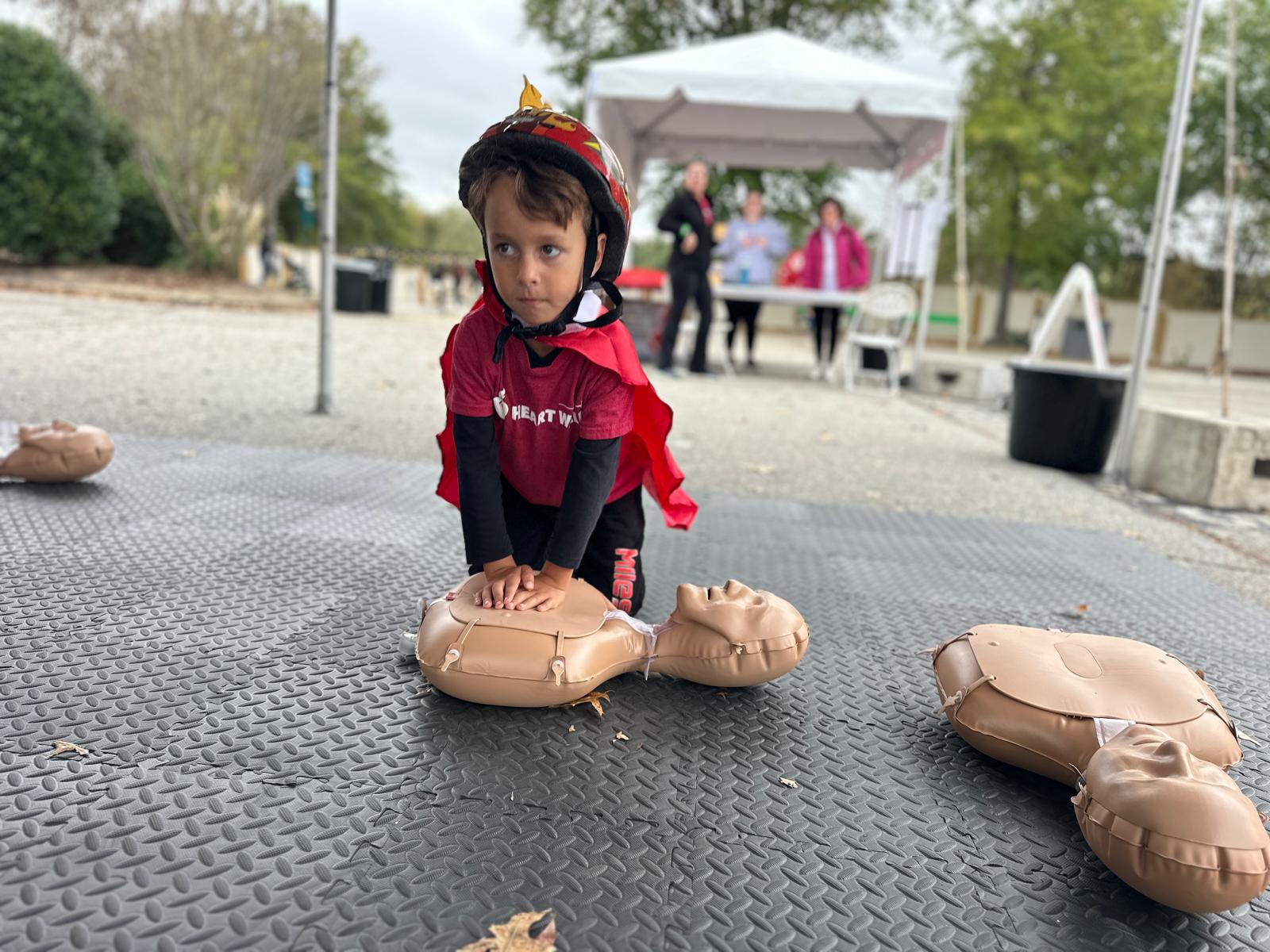
An AED and a Bleeding Control Kit save lives only when someone is ready to use them. Most bystanders have never touched an AED — and CPR and calling 911 are inseparable from the device. Tourniquets and wound packing take real practice.
That’s why a complete code pairs the equipment with a hands-on training requirement for building staff. The kit and the trained person work together — neither does the job alone. Make training part of your requirement from the start.
The 5-step blueprint
You don’t need to invent anything. Florida already wrote the template. Here’s how to bring it home.
Find your fire chief
You don’t need a lobbyist — you need one fire chief who sees the gap. Show them F-121 and let the fire service lead.
Build your local data case
Pull cardiac-arrest response times and local trauma incidents. Show the gap between what’s in your buildings today and what the code could require.
Draft your ordinance
Use F-121 and Ord. 11-24 as your legal starting point, and pair the equipment with a hands-on training requirement so the devices are backed by people ready to use them.
Build your coalition
More fire chiefs means more credibility — from city council to the county Board of Rules and Appeals to state fire code. A unified fire-service voice wins.
Make training part of the requirement
Require hands-on CPR/AED/BCK training for building staff alongside the equipment. Trained people are what turn a device on the wall into a life saved.
In 2017, bystanders saved my life.
On January 15, 2017, I collapsed at the Key West Half Marathon — sudden cardiac arrest, fifty yards from the finish line. Three off-duty nurses, Amy Smythe, Lisa Vos, and Robbie Ladd, performed CPR for ten minutes until paramedics arrived with a defibrillator. Their training held the line. The AED finished the job. Both were needed.
I survived. My son — born after that day — exists because three people in a crowd knew what to do, and did it. That’s why Rescue Beats exists.
Your community deserves that same chance.
Read the actual codes
These are the real, adopted codes — the starting point your attorney and fire service can adapt for your jurisdiction.
Broward County — Fire Code F-121
County-wide AED & Bleeding Control Kit requirement, adopted through the Board of Rules and Appeals.
Delray Beach — Ordinance 11-24
Municipal life-safety ordinance requiring AEDs and Bleeding Control Kits in covered buildings.
Take the blueprint with you
Ready to bring this to your community?
Rescue Beats helps advocates and fire services understand the fire-code pathway, build the case, and train the people who make the equipment matter. Let’s map your first step.
Book a Consult