
Should My Pickleball Court Have an AED?
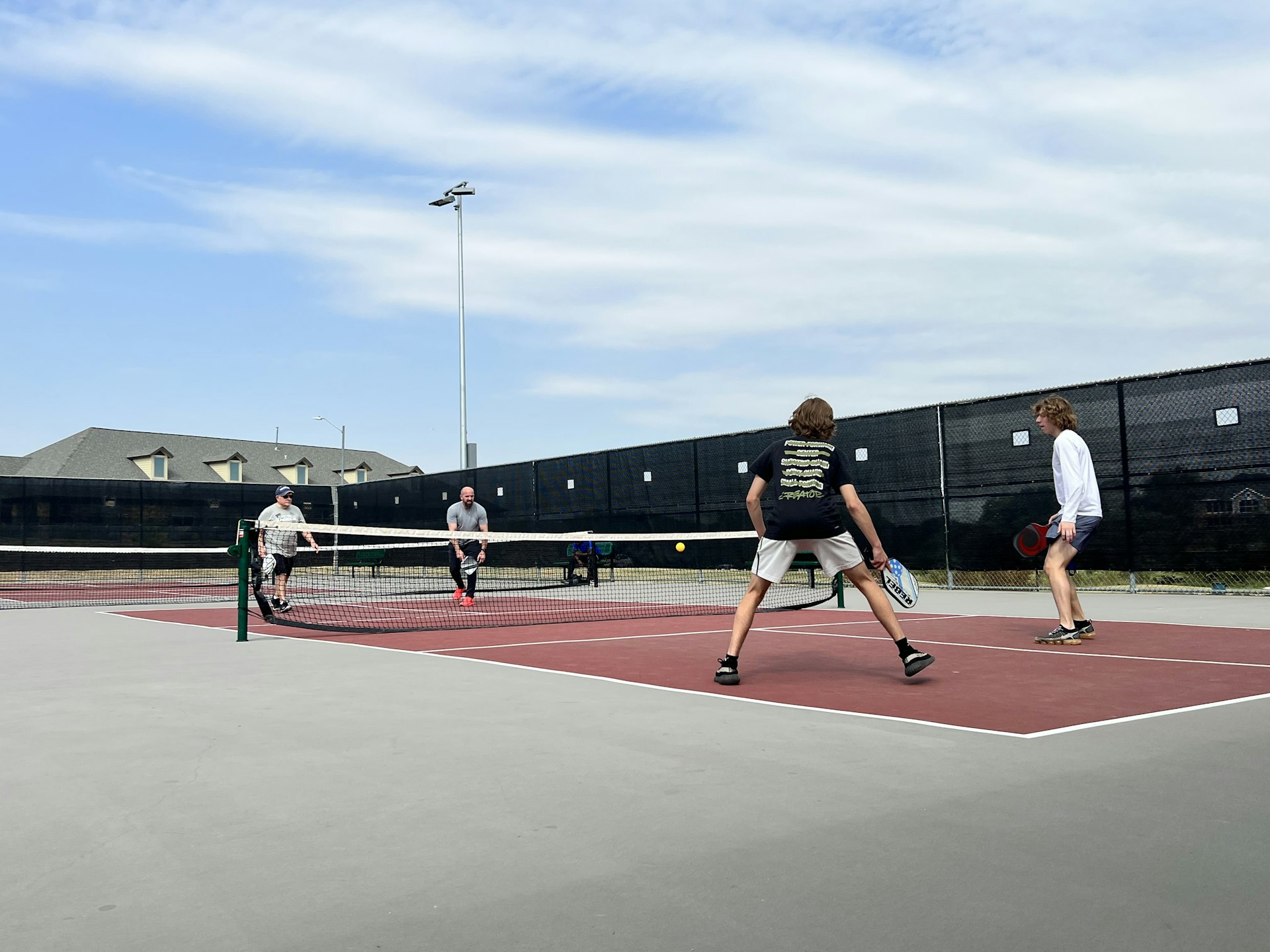
A few months ago, a man collapsed on a pickleball court at Holiday Park in Fort Lauderdale.
No warning. He was playing one moment, then on the ground.
A nurse who happened to be nearby immediately started chest compressions. Another player ran for the AED mounted at the park. Kris Dafa — a friend of ours — helped retrieve it and apply the pads.
The device analyzed the rhythm. Shock advised. One shock delivered.
The man regained consciousness before paramedics arrived — roughly seven minutes later.
He’s alive today because three things lined up: someone knew CPR, someone knew how to use an AED, and the AED was right there.
That’s not luck. That’s preparation meeting opportunity.
Pickleball Is the Fastest-Growing Sport in America — and Its Players Face Real Cardiac Risk
Pickleball now has over 36 million players in the United States, and the numbers keep climbing. Courts are packed at parks, HOAs, fitness clubs, and rec centers across South Florida and beyond.
Here’s what most people don’t talk about: close to 87% of pickleball injuries occur in players over 50, and that age group accounts for a disproportionate share of cardiac events on the court.
That’s not a knock on the sport — pickleball is genuinely great for cardiovascular health. But “good for your heart long-term” and “zero cardiac risk in the moment” aren’t the same thing.
During a typical game, players average a heart rate around 112 beats per minute — with frequent short bursts pushing higher. For someone with an undiagnosed heart condition, or someone who hasn’t exercised at that intensity in years, those spikes can trigger a sudden cardiac arrest (SCA).
SCA is different from a heart attack. It happens when the heart’s electrical system malfunctions, causing it to stop pumping effectively. Without intervention, it’s fatal within minutes. And it can happen to people who feel completely fine going into a game.
The Window That Determines Everything
After cardiac arrest, survival odds drop 7 to 10 percent for every minute without defibrillation.
The average EMS response time in Broward County is 6 to 8 minutes. Do the math: by the time paramedics arrive, a significant portion of that window is already gone — or has closed entirely.
CPR buys time. It keeps oxygenated blood moving and extends the window for defibrillation. But CPR alone rarely restores a normal heart rhythm. That’s what the AED is for.
When a bystander uses an AED in a public setting before EMS arrives, survival rates jump to 33.6% — more than triple the overall average for out-of-hospital cardiac arrest. In facilities with trained staff and AEDs on-site, survival rates for young athletes have reached 89%.
The intervention that makes the biggest difference — the AED — has to already be there.
Why Pickleball Courts Specifically Should Have AEDs
It’s not just that cardiac arrest can happen anywhere. It’s that pickleball courts have a specific combination of factors that make AED access especially important:
The player population skews older. While pickleball is growing across all age groups, a large and loyal base of players is 55 and up — exactly the demographic with higher cardiovascular risk.
Courts are often outdoors and spread out. At a park complex with multiple courts, the person nearest the fence may be a long run from the parking lot, the restrooms, or wherever an AED might otherwise be stored.
Games move fast and players push themselves. Even casual players get competitive. Short explosive sprints, lunges, and overhead shots create the kind of cardiovascular spikes that can trigger an event in a susceptible individual.
There are almost always bystanders. Unlike a solo runner collapsing on a trail, pickleball is a group sport. Help is right there — but only if they have something to help with.
The City of Fort Lauderdale had an AED at Holiday Park. The Fire Chiefs Association of Broward County has been leading the push for broader AED placement through the F-121 AED amendments — and because of that, someone’s family still has them.
Not every court has that coverage yet.
What a Good Court AED Setup Looks Like
Having an AED “somewhere nearby” isn’t enough. Here’s what actually matters:
Placement. The AED should be mounted in a clearly marked, visible location — not locked in an office or stored in a bag in a closet. Wall-mounted alarmed cabinets are the standard. Players and staff should know exactly where it is before they ever need it.
Condition. AEDs need regular inspection — battery checks, pad expiration dates, firmware updates. A unit that hasn’t been serviced in two years may not perform when it counts.
Training. AEDs are designed for untrained bystanders, but confidence matters in a crisis. Players who have taken a CPR and AED course respond faster, hesitate less, and are more likely to actually use the device.
Signage. If the AED is visible and clearly marked, anyone on the court can locate it — including a visitor who’s never been to the facility before.
A Note From Bill
I started Rescue Beats because I’m the person on the other side of this story.
In 2017, I collapsed at the finish line of the Key West Half Marathon. Three strangers who knew CPR and had access to an AED saved my life. I didn’t know any of them. I never saw it coming.
When Kris sent me that message after the Holiday Park save — “I knew what to do because of the awareness and training you’ve been sharing” — I felt it.
We didn’t supply that AED. We didn’t train those bystanders. But awareness spreads. Preparation spreads. And when the moment comes, it matters that someone in the crowd has thought about this before.
If you manage a pickleball facility, an HOA, a rec center, or a park — this is worth thinking about now, not after.
Frequently Asked Questions
Is a pickleball court legally required to have an AED in Florida?
Florida law (F.S. 768.1325) requires AEDs in certain public facilities, and Broward County’s F-121 AED amendment has expanded requirements for fitness and recreational facilities. Requirements vary based on facility type, square footage, and occupancy. The safest approach is to consult with a compliance provider and not rely solely on minimum requirements.
How much does it cost to put an AED at a pickleball court?
A complete AED package — device, alarmed cabinet, pads, battery, signage, and installation — typically starts around $1,295 for a refurbished unit and $1,895–$2,995 for new devices. Ongoing compliance management (inspections, pad replacement, documentation) is usually handled through an annual service agreement.
What if no one at the court knows how to use an AED?
Modern AEDs are designed for untrained bystanders — they provide voice and visual instructions for every step. You don’t need certification to use one. That said, a 2-hour CPR/AED course is all it takes to go from “I hope I’d know what to do” to “I know exactly what to do.”
Can one AED cover multiple pickleball courts?
It depends on layout. AHA guidelines recommend AED access within 90 seconds of any location in a facility. For a compact court complex, one centrally placed unit may be sufficient. For large outdoor parks with spread-out courts, multiple units may be needed. A site assessment can answer this quickly.
What’s the difference between an AED and CPR — and do you need both?
Yes — you need both. CPR keeps blood and oxygen moving to the brain and vital organs, buying time and extending the window for defibrillation. The AED delivers an electrical shock to restore a normal heart rhythm — something CPR alone cannot do. They work together.
Bottom Line
Pickleball courts bring people together — often older adults pushing themselves at an intensity they enjoy but aren’t always conditioned for. Cardiac events happen at these courts. They will keep happening.
The question isn’t whether it could happen at your facility. The question is whether, when it does, someone will have what they need.
An AED on the wall and a few people who know how to use it can be the entire difference.
If you’d like to talk through what AED coverage looks like for your court, park, or rec facility — we’re happy to do a free assessment with no pressure. That’s what we do.